Compass is a real estate brokerage first and a software company second, though the software is the reason it gets written about. Founded in 2012, it grew into the largest residential brokerage in the United States by closed sales volume, recruiting agents with the promise of a proprietary tech platform that handles their CRM, marketing, and client collaboration in one place.
In January 2026 the company got dramatically bigger. Compass completed its acquisition of Anywhere Real Estate — the parent of Coldwell Banker, Century 21, Sotheby's International Realty, Corcoran, ERA, and Better Homes and Gardens Real Estate — in a stock deal valued around $1.6 billion plus assumed debt. The combined company connects roughly 340,000 agents and affiliated professionals across the US and about 120 countries, with Robert Reffkin remaining CEO. The familiar brands continue to operate under their own names.
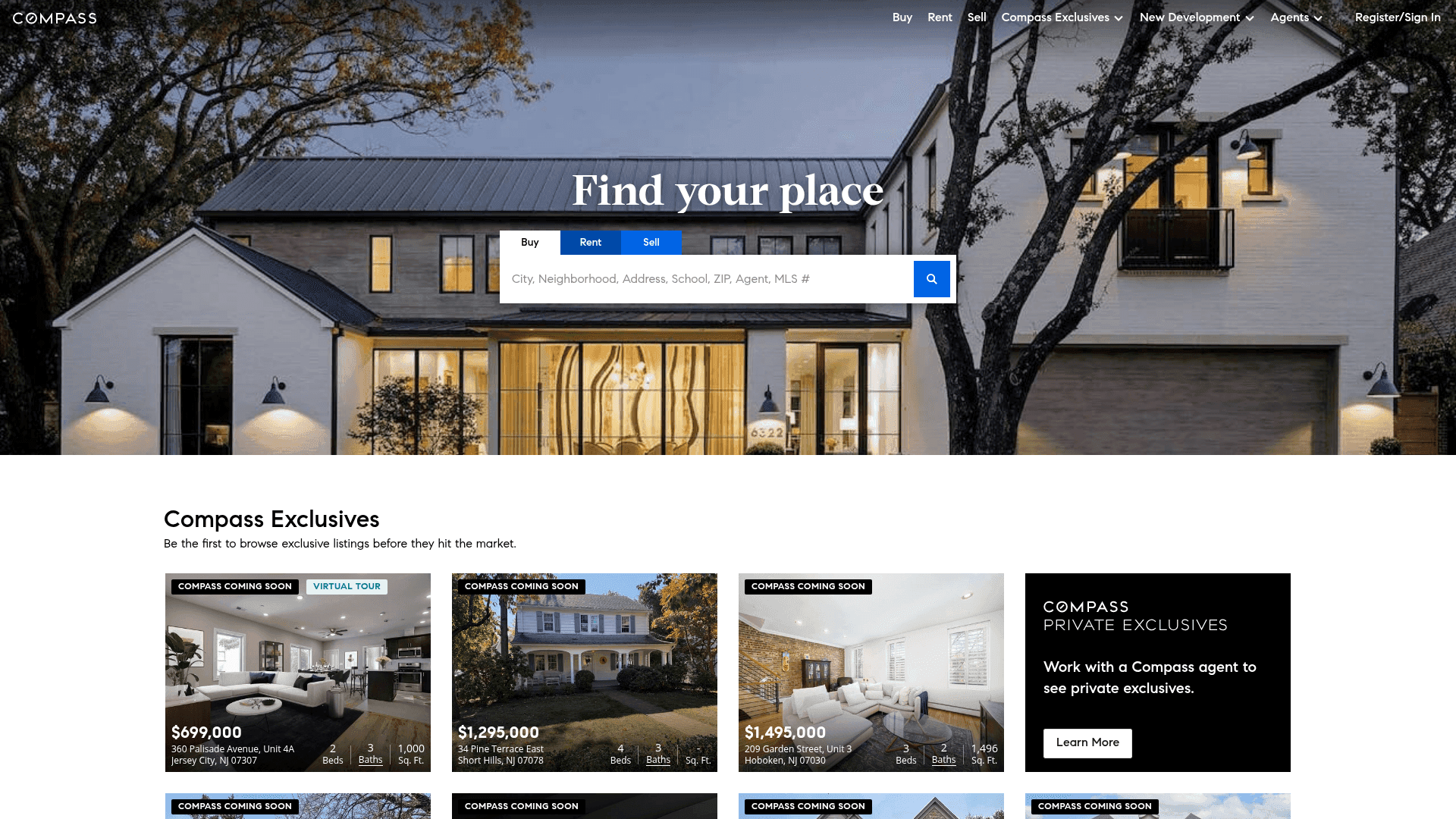
For consumers, compass.com works like any polished home search site: browse listings, save favorites, and connect with an agent, all free. The difference shows once you're working with a Compass agent, because the platform is built around that relationship rather than around advertising.
What Compass actually does
For agents, Compass replaces the usual duct-taped stack. The CRM tracks clients and nudges follow-ups, the marketing center generates listing ads, mailers, and video, and Compass AI drafts listing descriptions and client emails. Compass One, rolled out in 2025, gives buyers and sellers a single dashboard showing every step of their transaction — tours scheduled, documents pending, closing timeline — which quietly fixes the 'what's happening with my sale?' anxiety that fills agents' inboxes.
The most distinctive (and most argued-about) piece is inventory strategy. Compass promotes 'private exclusives' and 'coming soon' listings that appear only on Compass's platform before hitting the open market — a three-phase marketing pitch that tests price without accumulating days-on-market, and a big reason buyers working with Compass agents see homes others don't.
Key features
- Agent platform — CRM, transaction tracking, and business analytics in one system.
- Compass One — a shared client dashboard covering the whole transaction.
- Compass AI — drafting and marketing assistance built into the workflow.
- Collections — shared boards where buyers and agents save and discuss listings together.
- Private exclusives — pre-market inventory visible only inside Compass.
- Brand network — post-merger access to the Anywhere franchise brands and their referral networks.
Who it's for
Agents who want their brokerage to supply real tooling instead of a desk fee, sellers in competitive metros who like the phased-marketing pitch, and buyers who want access to pre-market inventory. Compass skews toward major metropolitan markets and higher price points, though the Anywhere brands broaden that reach considerably.
Our take
Having watched a lot of brokerage 'platforms' that amount to a logo on white-label software, we'll say Compass's tech is the genuine article — agents we know actually use it daily, and Compass One in particular solves a real communication problem rather than an imagined one. If you're choosing between agents of equal skill, the Compass one arrives with better tools.
Two reservations. Private exclusives are good for Compass and sometimes not for you: selling off-market means fewer eyes on your listing, and less exposure usually means fewer competing offers — industry critics have made exactly this argument, and we think sellers should demand a clear case for why limited marketing serves them before agreeing to it. And the Anywhere merger, while a coup on paper, is a massive integration of legacy franchise systems onto one platform; history says that takes years and gets messy. A great brokerage platform still doesn't outweigh the individual agent's skill — hire the person, not the software.