Discover, evaluate, deploy, and monitor radiology AI applications with local-data testing, a universal viewer, and clinical-system integration.
AI Image Analysis ToolsSee website
Analyze audio, images and video for deepfakes and apply or detect watermarks with Resemble AI’s current media-security platform and APIs.
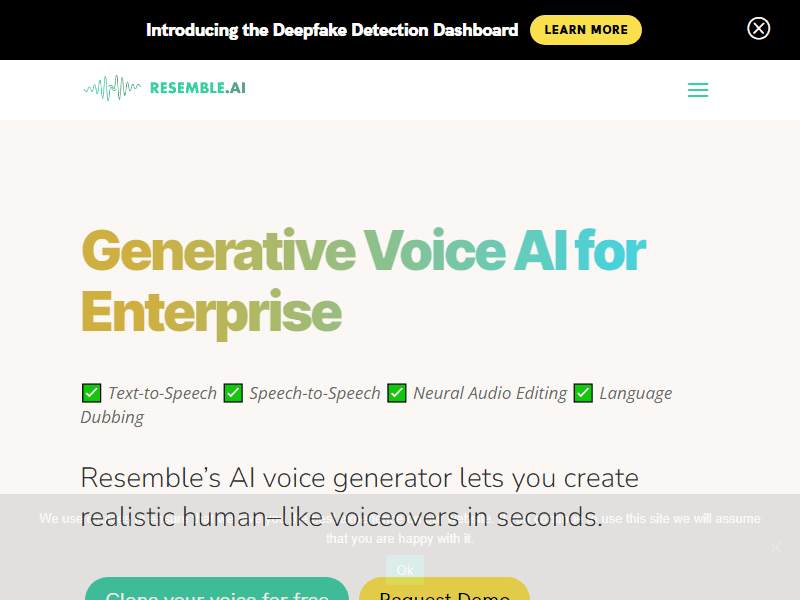
Resemble AI provides tools for analyzing synthetic media and applying or detecting watermarks. Its current platform addresses audio, images and video, with interfaces for individual review and integration into organizational systems. Suitable evaluators include media-verification teams, trust and safety operations and developers building controlled authenticity-review workflows.
The company's product notice states that commercial voice generation has been discontinued. Its earlier voice models remain available for research and development, which is a different access route from a commercial hosted voice-generation product. Existing users seeking narration or voice cloning should not assume those services remain part of the current offer.
Resemble Detect analyzes media and presents detection results with explanations. The API documentation distinguishes single-file requests, batch processing and streaming audio analysis. Responses include structured metrics and, where applicable, visualizations that a reviewer or downstream application can inspect.
Developers can reference a publicly accessible media URL or use the secure-upload flow to obtain a token. Streaming audio is a separate interface whose results are not persisted as standard Detect jobs. These distinctions matter when designing an audit record, callback handling or a review queue for submitted files.
The watermark API applies and checks watermarks in audio, images and video. Its documentation distinguishes the Resemble watermark results from an auxiliary SynthID signal. A single-file deepfake request can optionally include watermark analysis, but that evidence is returned separately and does not change the deepfake verdict.
Watermarking and detection answer different questions. One examines a supported mark; the other analyzes signals of synthetic tampering. The watermark response guide includes absent and inconclusive states. Neither should be treated as confirmation that a file is authentic or that its distribution is authorized.
A publisher could evaluate a suspicious interview clip by retaining the received file and recording its provenance. Submit a permitted copy for detection, then inspect the explanation, any visualized regions and separate watermark evidence. Compare the result with the original recording, an independently obtained source and the context in which the clip was shared.
For an integration pilot, use known original and manipulated samples that reflect expected formats and recording conditions. Define when a result routes to a specialist, and keep enough information to reproduce the review. Do not automatically publish an accusation or delete a submission on the basis of a single model result.
Detection output is evidence to investigate, not a complete account of how a file was created. Uncertain results, transformations and incomplete source context need human review. The vendor's promotional accuracy figures should not be read as a guarantee for your files or as certification that a workflow meets a legal requirement.
The pricing page offers initial free access, usage credits and paid organizational plans, with enterprise arrangements for additional deployment needs. Cloud and on-premises options are described for detection. Confirm supported media, retention, integration terms and expected usage before deployment; a no-subscription entry plan does not mean processing is unlimited or cost-free.