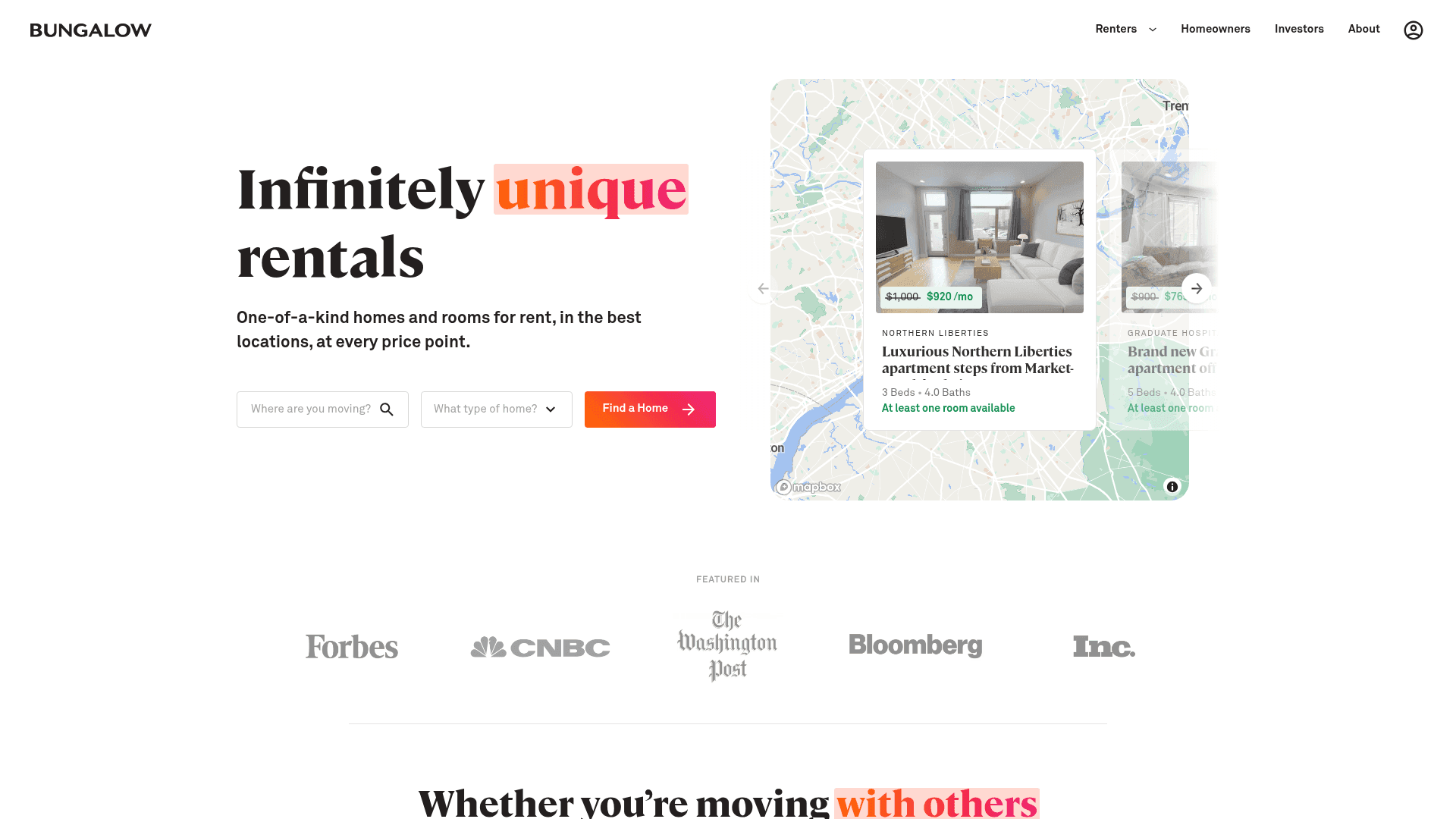
Bungalow is a co-living platform: instead of leasing a whole apartment, you rent a private room in a shared house, with the common areas furnished, utilities and wifi bundled into one monthly bill, and housemates screened through the platform. Founded in 2017, it raised around $150 million from investors including Coatue and Khosla Ventures and grew into one of the better-known names in US co-living, operating homes across major metros like New York, Los Angeles, Seattle, and Washington DC.
A serious caveat before anything else: Bungalow's future is in real doubt. Employee reports surfacing in late 2025 described the company as winding down operations, and while its website was still listing rooms into 2026, we found no announcement either confirming a shutdown or refuting one. Co-living has been a brutal category — competitors like Common collapsed outright — and Bungalow's recent tenant reviews skew heavily toward complaints about billing and deposit returns. If you're considering signing a lease, check the company's current status and read recent tenant reviews first.
What Bungalow actually does
The pitch is convenience and cost. A private room in a Bungalow house typically runs well below a studio apartment in the same neighborhood, and the annoying parts of shared housing — splitting the internet bill, furnishing a living room with strangers, finding a replacement housemate — are handled by the platform. You apply for a room, Bungalow screens you, and you sign your own individual agreement rather than going jointly liable on a group lease.
Behind the scenes, the model changed over time. Bungalow originally leased homes from owners and re-rented rooms; around 2022 it shifted toward a property-management arrangement, operating homes on behalf of owners rather than holding the leases itself. For tenants the experience looks similar either way — Bungalow is who you pay and who you call when the dishwasher dies.
Key features
- Room-by-room leases with individual agreements instead of joint liability
- Roommate screening and matching for compatible households
- Furnished common areas, so shared spaces aren't a negotiation
- One monthly bill covering rent, utilities, and wifi
- Flexible terms shorter than the standard 12-month apartment lease
- Big-metro footprint concentrated in expensive coastal job markets
Who it's for
Co-living in this style suits people moving to an expensive city without a network there: new grads, relocating workers, and anyone who wants housemates without the work of assembling a household from Craigslist. The individual-lease structure is the underrated part — if a housemate bails, that's the operator's problem, not yours. Whether Bungalow specifically should be that operator right now depends entirely on the status question above.
Our take
We like the co-living product more than the co-living industry. Room-by-room leases with matching and bundled bills genuinely fix the worst parts of shared housing, and when Bungalow was running well, it offered a soft landing in cities where a solo apartment is out of reach for a first-year salary.
But we can't recommend signing with a company whose survival is an open question. The pattern in this sector is that when operators fail, tenants find out late — deposits get slow, maintenance stops, and homes change hands mid-lease, and Bungalow's recent reviews already echo some of that. If the room and price look right, do twenty minutes of diligence: search for news from the past month, ask the leasing contact directly who owns and operates the home, and confirm in writing where your deposit is held. If those answers are fuzzy, take the same budget to a local room-share or a smaller operator with a live phone line.