FitnessAI suggests weights, sets and repetitions for strength workouts. Log what you complete and use the recommendations as part of a training plan suited to your ability.
Fitness AI ToolsPaid
JuggernautAI develops training programs for powerlifting and strength work. Log performance and feedback so the plan can adapt to the training information you provide.
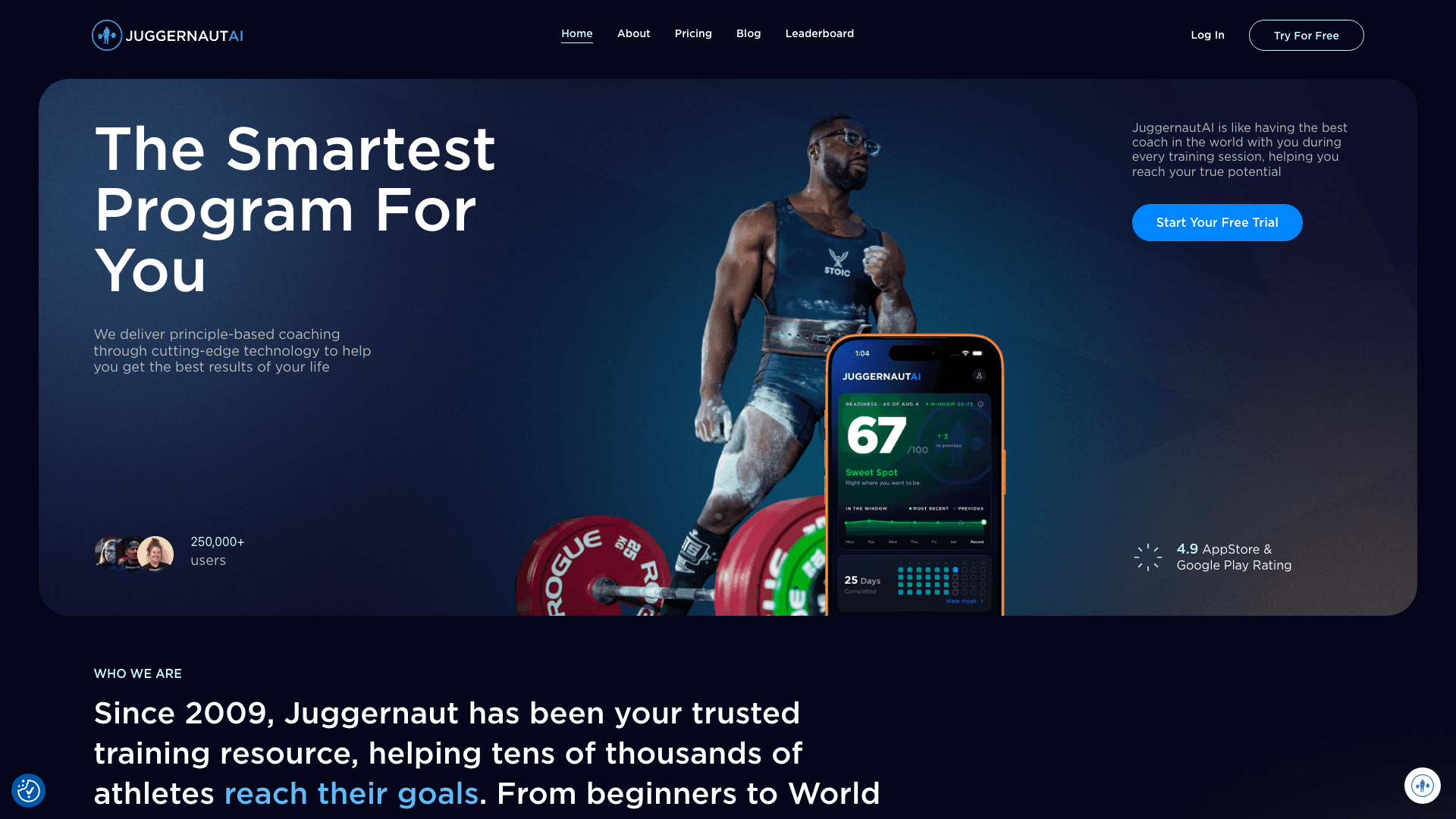
JuggernautAI is what happens when a real coaching company, not a startup with a fitness idea, builds the app. Juggernaut Training Systems has programmed powerlifters since 2009 under Chad Wesley Smith, and this is their methodology automated: you enter your maxes, goals and schedule, and it writes structured training blocks the way their coaches would, then adjusts them, as the app puts it, set to set, day to day, week to week, block to block.
The detail powerlifters will care about: it manages readiness. The app scores where you are on a given day and steers volume and intensity to match, which is the difference between periodization on paper and periodization that survives a bad week of sleep. Come meet season, the Meet Day Advisor plans your attempts. There's a 300+ exercise video library, weekly coach Q&As, and a private community around it. A quarter of a million lifters use it, and its 4.9 store rating is unusually high for an app this demanding.
$34.99 a month or $349.99 a year, both behind a two-week free trial. That's several times the price of a general fitness app and a fraction of the price of the human coaching it imitates. Whether that math works depends entirely on how seriously you take your total.
Beginners, honestly. The programming assumes you know your way around a barbell and care about numbers like weekly tonnage. If you're six months into lifting, Fitbod or the free PlanFit will serve you better until the plates get heavy. General fitness users will find it overkill in every direction.
For competitive and would-be-competitive strength athletes, this is the most credible AI programming on the market, because the intelligence behind it coached world champions before it was artificial.
Start with accurate training history, recent performance, available equipment, and the schedule you expect to maintain. Inspect the first block before committing to it, and make sure you understand the prescribed exercises and effort measures. Log the work actually performed rather than the planned numbers, since inaccurate entries can affect subsequent adjustments. For a competition-oriented use case, evaluate the relevant preparation workflow well before meet day. Keep human technique guidance available when a lift is unfamiliar. Check the current subscription in the official app or website; an older quoted price or trial length is not a substitute for the offer presented to your account.