AI tax assistant Taylor CPAI with document organization, year-round questions and human-reviewed US tax filing.
Finance AI ToolsFreemium
Riskalyze is now Nitrogen, a wealth-management platform with client risk and portfolio tools. Review the current product offering under the Nitrogen brand.
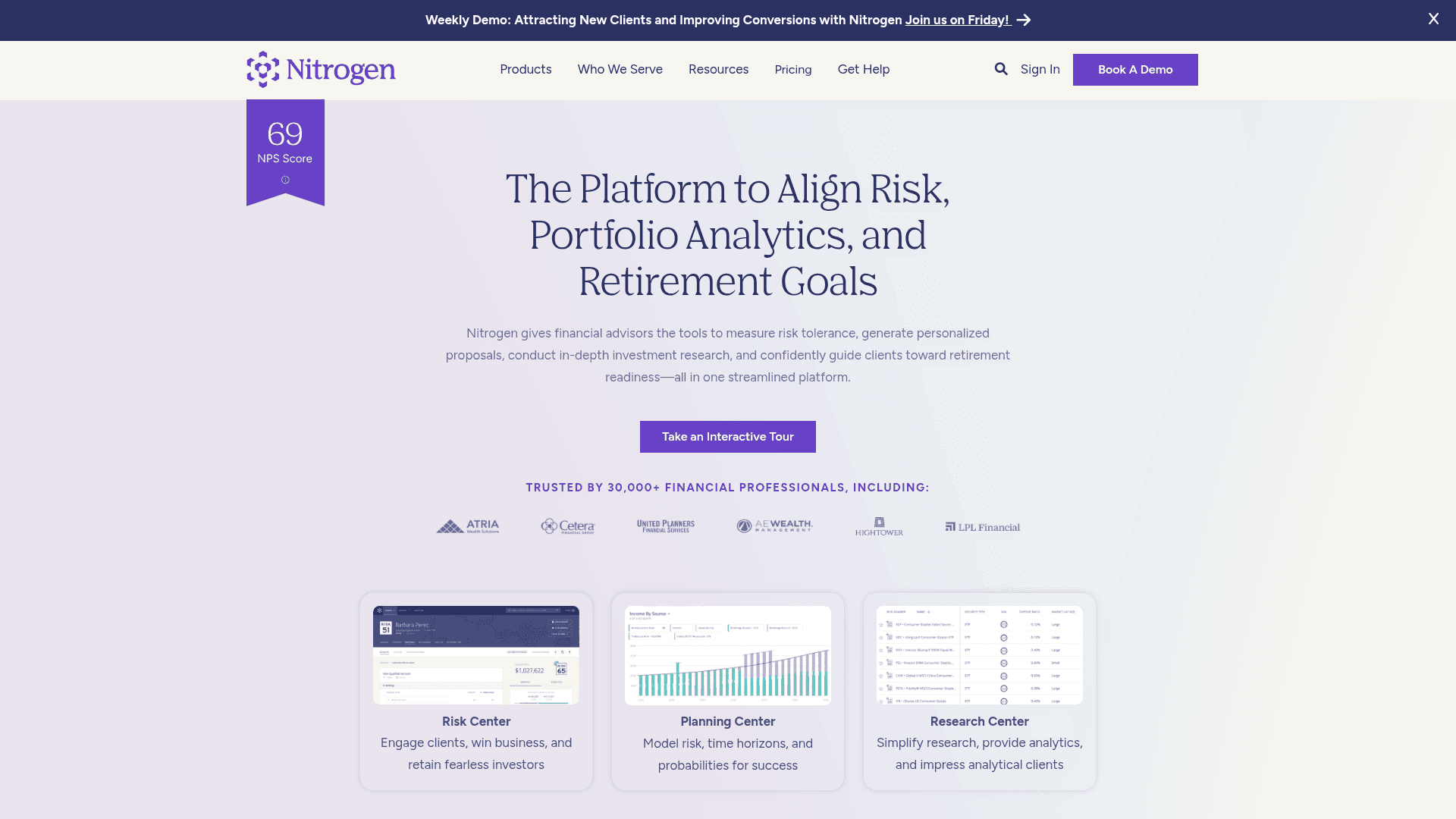
First things first: Riskalyze no longer exists under that name. In May 2023 the company rebranded as Nitrogen, repositioning itself from a risk-assessment tool into a growth platform for wealth management firms. Same company, same core invention, new name and a wider product. If you're searching for Riskalyze in 2026, Nitrogen at nitrogenwealth.com is where you'll land.
The invention that made the company famous is the Risk Number: a score from 1 to 99 that quantifies how much volatility an investor can actually stomach. A client answers a short questionnaire framed in dollar terms rather than abstractions, gets a number, and the advisor can then compare it against the Risk Number of the client's actual portfolio. The gap between the two is where the productive conversations happen; a self-described conservative investor holding a portfolio that scores 85 is a problem made visible.
The rebrand reflected a real product shift, not just new paint. The original software quantified risk tolerance and analyzed portfolios against it. Nitrogen keeps all of that and layers on tools for the rest of an advisory firm's funnel: lead-generation questionnaires firms embed on their websites, proposal generation for prospect meetings, retirement projections, and compliance oversight so a firm can spot accounts drifting out of line with client risk profiles. In 2024 it added integrated financial planning and investment research modules, pushing further onto turf held by dedicated planning software.
Nitrogen is squarely for financial advisors, RIAs, and broker-dealer teams in the US. It's a client-communication and growth tool for professionals, not something an individual investor subscribes to; if you're a retail investor, you'll only ever encounter it through an advisor's questionnaire or proposal.
Pricing is subscription-based per firm and quote-driven, with tiers that gate the newer growth and planning features. There's no public price list, so budget for a sales conversation, and ask specifically which modules your tier includes; the gap between entry and full-featured tiers is where surprises live.
We think the Risk Number remains one of the best client-communication devices wealth-tech has produced. It turns a mushy compliance requirement into a number a client actually remembers, and the drift-monitoring angle gives firms a defensible, documented process. Advisors tell us proposals anchored to a prospect's own risk score close business, and we believe them; the company dominates its category for a reason.
Our reservations: a single number can imply more precision than questionnaire-based psychology deserves, and risk tolerance measured in a calm meeting has a way of evaporating in a real drawdown, so treat the score as a conversation starter rather than a scientific constant. The platform's steady expansion also means paying for marketing, planning, and research modules a lean firm may not want, and we've heard consistent grumbling from longtime users about price creep since the rebrand. It's excellent software; just buy the tier that matches the job you actually have.