FitnessAI suggests weights, sets and repetitions for strength workouts. Log what you complete and use the recommendations as part of a training plan suited to your ability.
Fitness AI ToolsPaid
WHOOP tracks activity, sleep and recovery through a wearable and membership. Review the trends and coaching features as information about your training and routines.
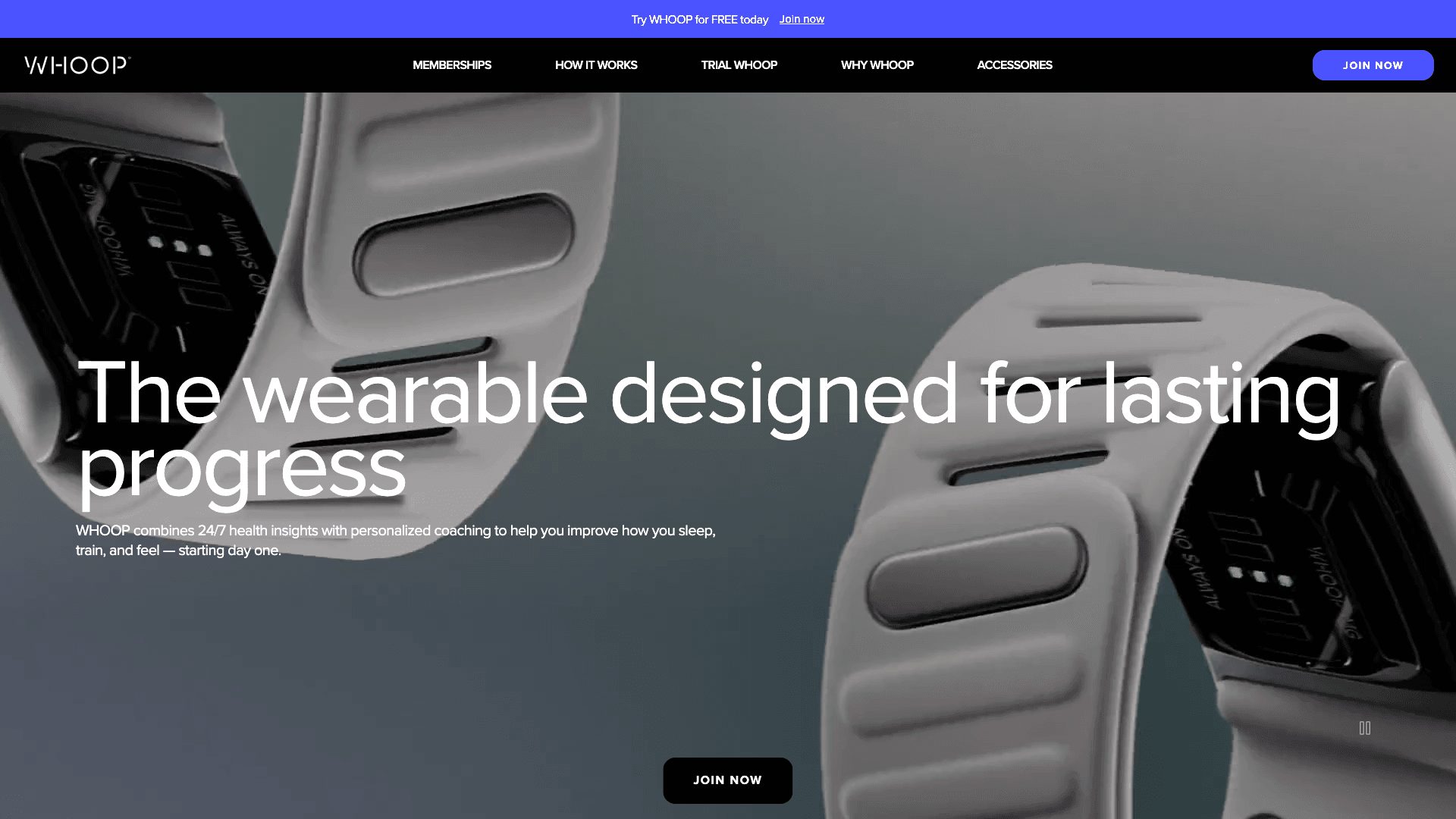
WHOOP centers on sleep, training strain and recovery. It's a screen-free band you wear around the clock, and its job is to tell you what your training is doing to your body. The app turns sensor data into sleep, strain and recovery insights that can inform a training decision. The coaching layer speaks plain language, answering questions about your own data rather than dumping charts on you.
The company's membership model bundles hardware with subscription. Current WHOOP One and Peak memberships both include WHOOP 5.0, which the company advertises with 14+ day battery life. One covers core sleep, strain and recovery insights and coaching; Peak adds features including Health Monitor, Stress Monitor and Healthspan. Life includes WHOOP MG and additional heart-health features. Check the current membership comparison and trial terms rather than relying on an older hardware bundle.
No screen means no distraction: it's a sensor, not a watch arguing for attention. A practical routine is to review the morning sleep and recovery information, ask WHOOP Coach about the recent training pattern and compare its suggestions with the day's plan. Strength Trainer also supports building and logging workouts. WHOOP documents AI-generated strength sessions based on goals, equipment and other supplied preferences. Review the proposed session before starting.
WHOOP uses a membership model, and its value depends on whether the tracking and coaching support your goals. Some heart-health features have age, region and eligibility restrictions. Blood Pressure Insights is a wellness feature, not a diagnostic blood-pressure measurement. Review the official medical information for the selected feature and location. A dedicated planner such as Fitbod or Athletica remains a relevant comparison for a particular strength or endurance program.
WHOOP suits someone willing to wear a sensor consistently and review trends over time. Its coaching documentation explains how questions and recommendations use training context. Treat those insights as inputs to your decisions, with human coaching where needed.